Every summer, the same thing happens. The snow melts, the trails open up, and hikers pour back into the mountains excited for long days outside. And every summer, a lot of those hikers realize—usually about two miles into their first climb—that their legs aren’t quite as ready as they thought.
Trail legs are different than “in-shape” legs. You can be active all winter and still struggle on sustained elevation gain, steep descents, or uneven terrain. Hiking doesn’t just ask your muscles to be strong—it asks them to work for hours, stabilize your body on unpredictable surfaces, and keep going long after the burn sets in.
The good news is that building trail-ready legs doesn’t require fancy equipment or extreme workouts. It requires intention, consistency, and training movements that actually translate to hiking. With summer hiking season approaching, now is the time to prepare your legs so you can focus on the views, not the fatigue.
What Makes Hiking So Hard on the Legs
Hiking stresses the lower body in ways most people don’t experience in daily life. Long ascents demand continuous power from the quads and glutes. Descents—often overlooked—place heavy eccentric load on the muscles, especially the quads, which is why downhill sections can feel brutal late in the day.
Add in a pack, variable footing, altitude, and hours of repetition, and suddenly hiking becomes a full-body endurance challenge with a serious leg focus. Unlike a short workout, hiking doesn’t allow for many breaks. Your legs need both strength and stamina to keep performing mile after mile.
This is why isolated gym machines or random leg workouts often fall short. To prepare properly, you need movements that mirror what actually happens on the trail.
The Key Muscle Groups for Hiking
Strong hiking legs start with understanding which muscles do the most work.
The quadriceps are the primary drivers on climbs and the shock absorbers on descents. Well-conditioned quads help control downhill movement and reduce knee pain.
The glutes provide power and stability, especially on steep terrain. Weak glutes often lead to overworked quads and lower back fatigue.
The hamstrings assist with hip extension and help stabilize the knee joint, especially when navigating uneven ground.
The calves handle push-off with every step and play a major role in balance. Fatigued calves can quickly lead to shortened strides and early exhaustion.
Training all of these muscle groups together, rather than in isolation, is what creates legs that feel dependable on the trail.
Why Compound Movements Matter Most
Compound movements—exercises that use multiple muscle groups at once—are the foundation of hiking fitness. These movements replicate real trail demands far better than isolated exercises.
Squats, lunges, step-ups, and deadlifts all teach your body to work as a unit. They build coordination, balance, and strength that transfers directly to hiking.
When you step up onto a rock or climb a steep switchback, your body doesn’t recruit one muscle at a time. It fires everything together. Compound movements train that exact pattern.
If you’re short on time, focusing on compound lifts will give you the biggest return on investment.
Step-Ups: The Most Underrated Hiking Exercise
If there is one exercise that belongs in every hiker’s training plan, it’s the step-up.
Step-ups closely mimic the motion of hiking uphill. Each repetition reinforces proper mechanics, builds single-leg strength, and challenges balance. Unlike squats, step-ups train each leg independently, which helps address strength imbalances that can cause fatigue or injury on long hikes.
Start with a box or bench roughly knee height. Step up with one foot, drive through the heel, and bring the trailing leg up to stand tall. Step down under control and repeat.
As you get stronger, add weight by holding dumbbells or wearing a pack. Focus on slow, controlled movement rather than speed. Quality matters more than quantity.
Over time, step-ups build the kind of strength that makes steep trails feel manageable rather than intimidating.
Lunges for Stability and Control
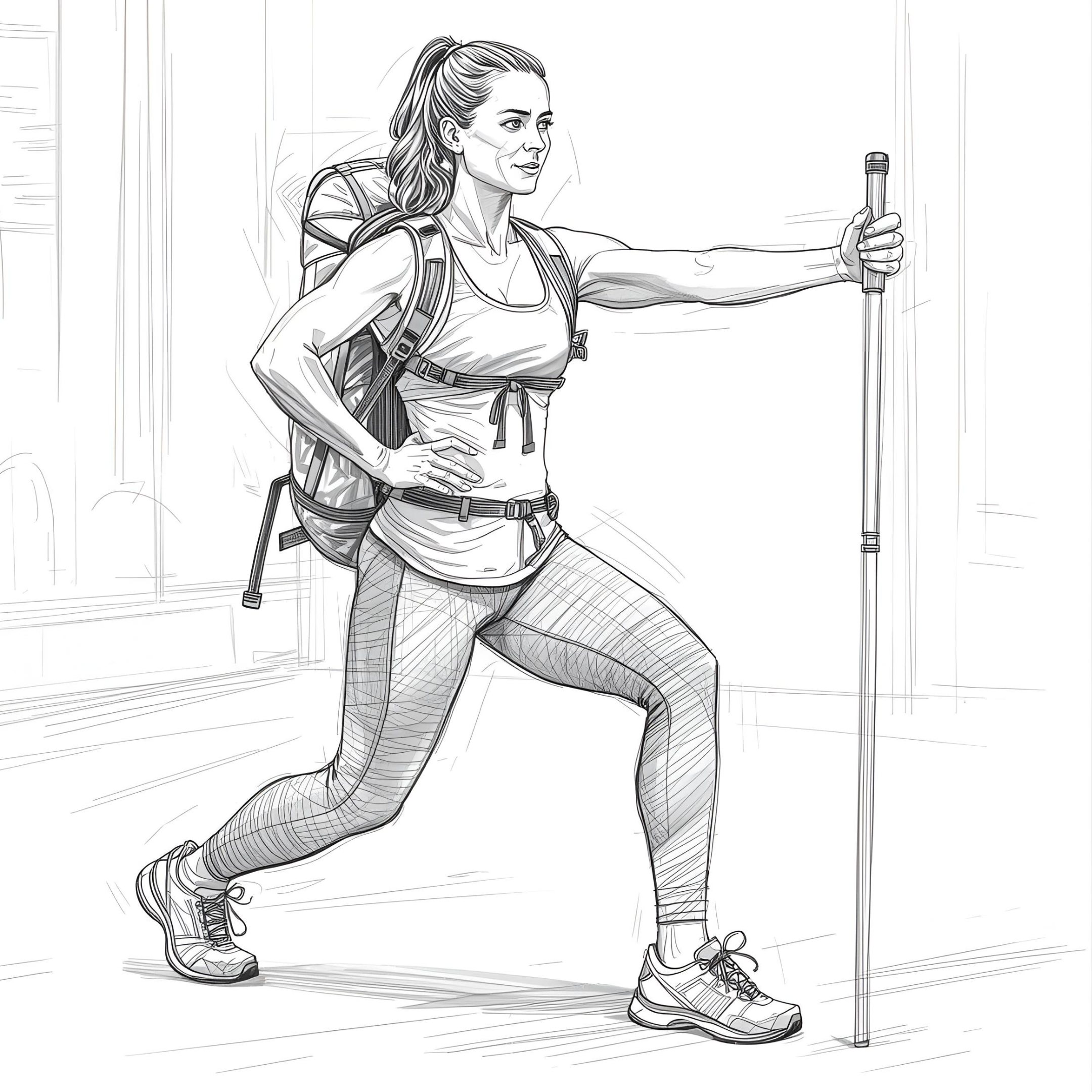
Lunges are another highly effective exercise for hikers because they train stability in multiple planes of motion. Trails are rarely straight or flat, and lunges help prepare your legs for that variability.
Forward lunges emphasize strength and control, while reverse lunges are often easier on the knees and help build balance. Walking lunges add a dynamic element that more closely resembles hiking movement.
Pay attention to form. Keep your torso upright, engage your core, and control the descent. Rushing through lunges defeats their purpose.
Adding lunges to your routine helps improve coordination and reduces the likelihood of awkward steps causing strain on the trail.
Squats and Deadlifts for Foundational Strength
While step-ups and lunges are highly specific, squats and deadlifts provide foundational strength that supports everything else.
Squats develop overall lower-body power and reinforce good movement patterns. Whether you prefer bodyweight squats, goblet squats, or barbell squats, consistency matters more than variation.
Deadlifts strengthen the posterior chain, including the glutes and hamstrings, and teach proper hip hinge mechanics. This strength helps protect your lower back when carrying a pack and navigating steep terrain.
You don’t need to lift heavy to benefit. Moderate weight with good form builds resilience and confidence that carries over to long hiking days.
Don’t Skip Calf Training
Calves are often neglected, but they play a huge role in hiking endurance. Every step uphill relies on calf strength, and tired calves can quickly turn an enjoyable hike into a slog.
Standing and seated calf raises help target both major calf muscles. Single-leg calf raises add a balance component that’s particularly useful for hiking.
Higher repetitions with controlled movement build endurance rather than just strength. This helps your calves perform consistently over long distances.
Strong calves also support ankle stability, which is crucial on rocky or uneven trails.
Eccentric Training for Downhill Confidence
Many hikers feel strong going uphill but fall apart on the descent. That’s because downhill hiking places eccentric stress on the muscles—they lengthen under load rather than shorten.
To prepare for this, focus on slow, controlled lowering phases in your exercises. Slow squats, slow step-downs, and controlled lunges all train your muscles to absorb force.
Wall sits are another effective tool. Holding a wall sit for extended periods builds quad endurance and prepares your legs for sustained downhill effort.
Eccentric strength reduces soreness, improves control, and helps you finish hikes feeling strong rather than wrecked.
Building Endurance, Not Just Strength
Hiking is an endurance activity, and your leg training should reflect that. Heavy lifts alone won’t prepare you for hours on the trail.
Incorporate higher-rep sets, longer time under tension, and circuits that keep your legs working continuously. Supersets and interval-style workouts can help simulate the sustained effort of hiking.
Long walks with elevation, even at an easy pace, are also incredibly valuable. They condition your legs to repetitive movement and reinforce the strength you build in the gym.
The goal isn’t to exhaust yourself every workout—it’s to gradually increase your capacity to work longer without fatigue.
Sample Trail-Ready Leg Workout
A simple, effective leg workout for hikers might look like this:
Start with a dynamic warm-up focusing on hips, ankles, and knees.
Perform step-ups for 3–4 sets of 8–12 reps per leg.
Follow with squats for 3 sets of 10–15 reps.
Add walking lunges for 2–3 sets of 20 total steps.
Finish with calf raises for 3 sets of 15–20 reps and a wall sit hold.
Adjust weight and volume based on your experience level. The goal is steady progression, not max effort every session.
Consistency Beats Intensity
One of the biggest mistakes hikers make is training too hard, too fast. Pushing aggressively early in the season often leads to sore knees, tight hips, or burnout.
Consistency matters far more than intensity. Two to three focused leg workouts per week over several months will produce better results than sporadic high-intensity sessions.
Listen to your body, prioritize recovery, and allow time for adaptation. Hiking season is a marathon, not a sprint.
Taking Strong Legs to the Trail
As summer approaches, strong legs translate to confidence. Confidence means longer days, bigger objectives, and more enjoyment on the trail.
When your legs are prepared, you move more efficiently, recover faster, and spend less mental energy worrying about fatigue. You notice the scenery, enjoy the conversations, and finish hikes feeling accomplished rather than depleted.
Trail-ready legs don’t happen by accident. They’re built intentionally, one workout at a time. Put in the work now, and your summer hikes will reward you for it.