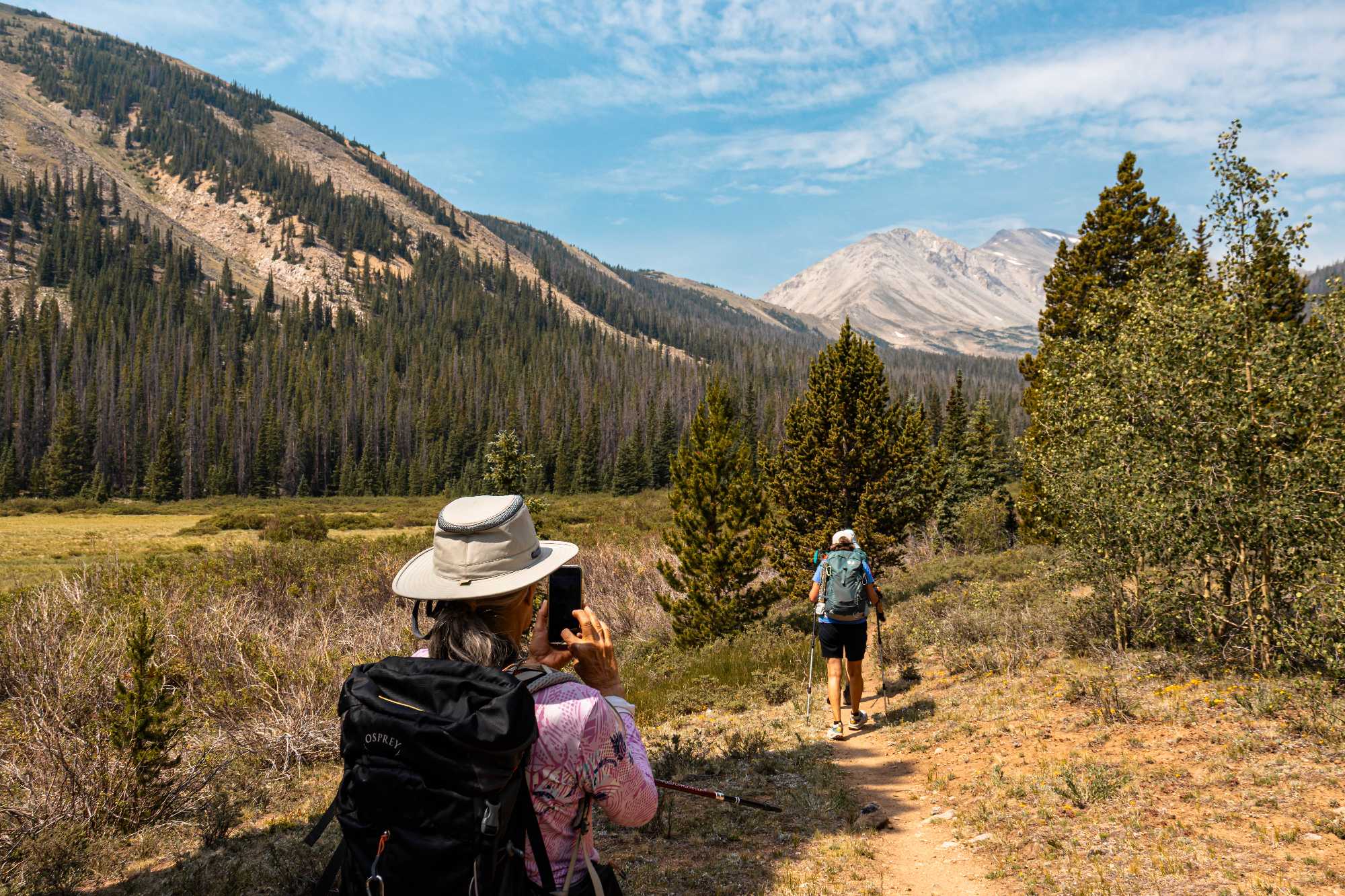
How to Choose the Right Colorado Trail Trek for Your Hiking Goals
Choosing a Colorado Trail trek is about more than picking a section of trail on a map. You need to consider how far you want to hike each day, how much elevation you are comfortable gaining, the terrain you want to experience, and what kind of mountain adventure you hope to have.
The Colorado Trail stretches for nearly 500 miles through the Colorado Rockies, passing through forests, high alpine terrain, mountain passes, and some of the state's most spectacular scenery. Completing the entire trail is a major undertaking, but you do not have to hike all 500 miles to experience its highlights.
Colorado Mountain Expeditions offers guided, multi-day Colorado Trail treks that allow hikers to experience individual portions of the trail without carrying all their camping equipment from one campsite to the next. With professional guides, meals prepared at camp, and transportation of camping gear, you can focus on the hiking itself.
Here's how to choose the right trek for your goals.
Start With Your Hiking Experience
Before comparing individual treks, take an honest look at your hiking experience.
Have you completed several consecutive days of hiking? Are you comfortable spending hours on mountain trails? Have you hiked at elevations above 10,000 feet? And how do you feel about climbing steep terrain for extended periods?
These questions matter because a hike that feels manageable on the first day can become more challenging after several consecutive days on the trail.
You do not necessarily need extensive backpacking experience to join a guided Colorado Trail trek. However, you should be prepared for the physical demands of the specific trip you choose.
If you are relatively new to hiking, consider your current fitness level, previous hiking experience, and ability to spend multiple hours on your feet. Experienced hikers may be ready for longer days, more elevation gain, and more demanding mountain terrain.
The goal is to choose a trek that challenges you without exceeding your current abilities.
Compare Hiking Difficulty, Not Just Distance
Daily mileage is one of the easiest ways to compare hiking trips, but it does not tell the whole story.
A relatively short hike with substantial elevation gain can be more demanding than a longer day on gradual terrain. Rocky trails, steep climbs, uneven surfaces, and high elevations can also affect how difficult a day feels.
When comparing Colorado Trail treks, consider these factors together:
-
Daily mileage: How many miles will you hike each day, and can you comfortably handle that distance on consecutive days?
-
Elevation gain: How much climbing will you do? Long ascents can be physically demanding even when the mileage seems reasonable.
-
Terrain: Will you encounter rocky paths, steep grades, exposed ridgelines, or extended sections above treeline?
-
Altitude: Much of the Colorado Trail crosses high-elevation terrain, where physical exertion may feel more difficult than it does at lower elevations.
-
Recovery time: Does the itinerary include a rest day, or will you hike every day of the trip?
Look at the complete itinerary rather than relying on a single difficulty label. Two treks described as moderate can involve noticeably different combinations of mileage, elevation gain, and terrain.
Choose the Type of Experience You Want
Your ideal Colorado Trail trek also depends on what you want to get out of the experience.
Some hikers want to spend their days immersed in mountain scenery without pushing their physical limits. Others want a demanding challenge that tests their endurance and takes them through rugged, high-elevation terrain.
Think about your priorities before choosing a trip.
A More Relaxed Mountain Adventure
If your primary goal is to enjoy Colorado's mountain scenery, spend time outdoors, and experience a multi-day guided trip without choosing the most demanding terrain, look for an itinerary whose mileage and elevation gain match your current fitness.
Colorado Mountain Expeditions also offers the Hiking and Hot Springs trip through the Colorado Trail Foundation. This provides a different kind of guided hiking experience for people interested in combining time on the trail with a relaxing hot springs visit.
Keep in mind that an easier option is still a physical activity. You should review the actual itinerary and determine whether its hiking demands are appropriate for you.
A Moderate Multi-Day Hiking Challenge
Moderate Colorado Trail treks can be a good fit for hikers who are comfortable with regular hiking and want to take on longer days in the mountains.
Colorado Mountain Expeditions classifies Treks 1, 2, 4, and 5 as moderate. These options provide opportunities to experience different portions of the Colorado Trail while taking on the demands of multi-day mountain hiking.
Before selecting one, compare the individual itineraries. Your preferred scenery, daily distance, elevation gain, and trip dates can help determine which option makes the most sense.
A More Demanding Mountain Trek
If you are an experienced hiker looking for a greater physical challenge, consider the more difficult Colorado Trail treks.
CME classifies Treks 6 and 7 as difficult. These trips are intended for hikers prepared for demanding terrain and substantial physical exertion.
For example, Trek 6 travels from San Luis Pass to Molas Pass, covering approximately 76.5 miles with about 14,599 feet of elevation gain and 14,624 feet of elevation loss. The itinerary includes four challenging hiking days and a rest day.
A trek of this nature requires more than enthusiasm. Review the mileage, elevation profile, daily itinerary, and stated fitness expectations carefully before registering.
Decide Whether You Want to Carry a Full Backpack
One of the biggest differences between a traditional backpacking trip and a Colorado Mountain Expeditions Colorado Trail trek is how your equipment gets from one campsite to the next.
On a traditional backpacking trip, hikers generally carry their sleeping equipment, shelter, food, clothing, and other supplies in their packs.
On CME's supported Colorado Trail treks, you hike with a daypack while CME transports the camping equipment between campsites. This allows you to experience consecutive days on the Colorado Trail without carrying your entire overnight setup on your back.
At camp, guests can enjoy guide-prepared hot breakfasts and dinners, along with a more comfortable camping setup than a typical self-supported backpacking trip. Guests are responsible for setting up and taking down their own personal sleeping tents.
This arrangement does not eliminate the physical demands of hiking. You still need to be prepared for the mileage, climbing, terrain, and altitude associated with your chosen itinerary.
However, if you want to experience the Colorado Trail without carrying a full backpack, a supported trek may be an appealing option.
Think About the Scenery You Want to Experience
The Colorado Trail travels through a remarkable variety of landscapes, from wooded foothills and expansive forests to high mountain passes and dramatic alpine terrain.
When comparing treks, consider the type of scenery that excites you most.
Do you want to experience high mountain country? Are you interested in rugged terrain and challenging passes? Would you prefer a trip that combines mountain hiking with other outdoor experiences?
Your answers can help narrow the options.
It is also worth remembering that scenery and physical difficulty often go hand in hand. Some of Colorado's most dramatic mountain landscapes require sustained climbing and hiking at high elevations.
Review the specific route and itinerary for each trek rather than assuming that every section of the Colorado Trail offers the same experience.
Consider the Number of Days You Can Commit
Your schedule can help narrow your options just as much as your fitness level.
Some hikers have only a few days available for a mountain getaway, while others can commit to a longer trip. Before selecting a trek, consider how much time you can realistically set aside for the trip, including travel to and from Colorado.
Look at the complete itinerary and determine whether the hiking schedule works with your availability. If you have limited experience with consecutive days of hiking, remember that a multi-day trek can be more demanding than completing a similar total distance across separate weekends.
You should also consider whether you want a trip with a rest day or prefer an itinerary focused primarily on hiking.
Once you know your available dates, compare the currently offered trips to find an itinerary that fits both your schedule and your hiking goals.
Understand What Is Included Before You Register
Not all guided hiking trips provide the same level of support. Comparing what's included can help you determine which experience offers the best fit for your expectations.
Colorado Mountain Expeditions provides guided Colorado Trail treks designed to make multi-day hiking more accessible and comfortable without removing the adventure of being on the trail.
Depending on the trip, the experience includes professional guiding, transportation of camping equipment between campsites, guide-prepared hot breakfasts and dinners, and a comfortable camp setup with shared living and kitchen tents.
CME also provides coffee and tea, cold drinks, and a range of camp comforts. Meals are prepared at camp rather than relying on freeze-dried backpacking dinners.
Be sure to review the registration page for your specific trek to confirm the itinerary, inclusions, equipment requirements, and any additional expenses.
Understanding these details before registering helps ensure that you know what to expect when you arrive.
Choose a Trek That Matches Your Goals, Not Someone Else's
It can be tempting to choose the most difficult trek or the one covering the greatest distance. But the best trip is not necessarily the most demanding one.
For some hikers, success means experiencing beautiful mountain scenery, enjoying time outdoors, and completing a multi-day adventure at a manageable pace. For others, it means tackling challenging climbs, covering substantial mileage, and testing their endurance in the Rockies.
Both are worthwhile goals.
The important thing is to select a trek that matches your experience, fitness, schedule, and interests. Read the itinerary, compare the daily hiking demands, and ask questions if you are uncertain whether a particular trip is appropriate for you.
If you are deciding between two treks, compare their daily mileage and elevation gain side by side. Those details will often tell you more about the physical demands than the difficulty label alone.
Find Your Colorado Trail Adventure With Colorado Mountain Expeditions
You do not have to commit to hiking the entire Colorado Trail to experience the best of Colorado's mountain landscapes. Choosing the right guided trek lets you focus on a particular portion of the trail and enjoy a supported multi-day hiking experience.
Colorado Mountain Expeditions offers options ranging from moderate mountain treks to demanding routes through rugged alpine terrain. With experienced guides, transported camping equipment, and hot meals prepared at camp, you can spend your time concentrating on the trail and the scenery around you.
Ready to find your trek? Explore the available trips at Colorado Mountain Expeditions and review each itinerary to find the one that best matches your hiking goals.
Disclaimer: This article was written with the assistance of artificial intelligence (AI) and may contain errors or outdated information. Verify important details against the current trip itinerary and other authoritative sources before relying on them. Before beginning a new exercise program or undertaking strenuous or high-altitude hiking, consult a qualified healthcare professional to determine whether the activity is appropriate for your health and fitness level. For trip-specific preparation and safety questions, consult a qualified outdoor professional. Always follow current official guidance regarding weather, trail conditions, and outdoor safety.